Empathy and Research
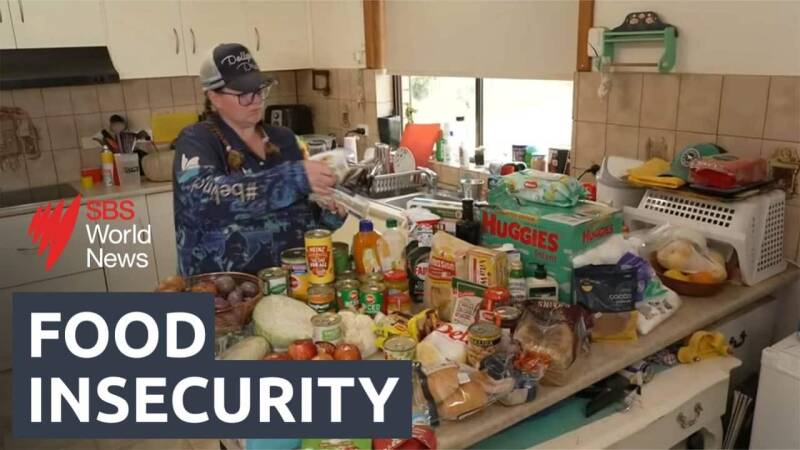
(SBS WorldNews, 2024)
Who Is Affected?
To better understand this problem, it is essential to identify the key stakeholders. The primary stakeholders are households and families, because they make everyday decisions about buying, cooking, storing, and disposing of food. Children are also key stakeholders because they form lifelong habits and attitudes toward food and sustainability from a young age. Other stakeholders include supermarkets and food retailers, which impact food purchasing behaviours; waste services; and local councils, which manage food waste disposal, and government and environmental organisations, which develop policies and campaigns to reduce waste.
Understanding the Problem
Household food waste is a substantial issue in Australia and is strongly linked to Sustainable Development Goal 12: Responsible Consumption and Production. Even though food waste may look like a small household problem, it has major environmental, economic, and social impacts. When food is tossed away, the resources used to produce it, such as water, land, energy, labour, and money, are also wasted (Gustavsson et al., 2011, p. 5). Furthermore, food waste sent to landfill emits methane, a powerful greenhouse gas that causes climate change (Department of Climate Change, Energy, the Environment and Water [DCCEEW], 2023, p. 7).
In Australia, food waste is a major national concern. Australia wastes around 7.6 million tonnes of food each year, with a significant proportion of this waste coming from households (DCCEEW, 2023, p. 6). This reveals that families play a critical role in reducing food waste and adopting more sustainable consumption practices.
Primary Data Collection
| Category | Purpose | Survey Questions |
|---|---|---|
| Demographic Information | To understand the household context | How many people live in your household? |
| Food Habits (Behaviour) | To explore everyday practices | How often does your household throw away food? Do you plan meals before shopping? How often do you check your fridge before shopping? What do you do with leftovers? |
| Food Waste Patterns | To identify commonly wasted foods | What types of food are most commonly wasted? |
| Causes of Food Waste | To understand why food is wasted | What are the main reasons food gets wasted? |
| Awareness & Knowledge | To assess understanding of food labels | Are you familiar with “use by” and “best before” labels? |
| Sustainability Practices | To evaluate eco-friendly behaviours | Do you compost food scraps at home? |
| Solutions & Improvements | To explore possible solutions | Would tools help reduce food waste? What strategies do you use? What could help reduce food waste? |
Evidence of Survey Gathered from 10 Local families


Local Council Insights on Household Food Waste (via Phone)
To gain deeper insight into household food waste practices, interviews were conducted with two local council representatives working in waste management and sustainability. The Waste Management Officer highlighted that food waste in households is primarily caused by over-purchasing, cooking excessive amounts of food, and forgetting items in the fridge (Waste Management Officer, personal communication, March 2026). Similarly, the Sustainability Officer emphasised that simple behavioural changes, such as meal planning and using leftovers, can significantly reduce food waste (Sustainability Officer, personal communication, March 2026). Both participants noted that local councils support households through educational programs, composting initiatives, and community workshops aimed at promoting sustainable practices. These insights reinforce the findings from the primary survey data, demonstrating that food waste is largely driven by everyday behaviours and can be reduced through practical, accessible solutions.
Research from Data
To explore the issue further, primary data was collected through short surveys and informal interviews with households and community members. Participants were asked about how often food is wasted in their homes, what types of food are commonly thrown away, and what usually causes food waste.
The responses suggested that many households waste food unintentionally. Common reasons included buying too much food, forgetting about leftovers, poor meal planning, and not using food before it spoils. Participants also reported that fresh foods such as fruit, vegetables, bread, and cooked leftovers are wasted most often. Some people also shared that confusion around “best before” and “use by” labels contributes to unnecessary food disposal.
These findings are consistent with Australian research, which shows that households are responsible for a large share of the nation’s food waste (Food Innovation Australia Limited [FIAL], 2021, p. 12). This research helped identify the everyday behaviours behind food waste and highlighted the need for practical solutions that families can use at home.
Why Empathy Matters
The empathy stage is important because it focuses on understanding real people, their experiences, and the challenges they face. Rather than assuming why food waste happens, this stage helped reveal that household food waste is often linked to busy lifestyles, limited planning, and lack of awareness rather than intentional wastefulness. By listening to stakeholders and examining their experiences, it becomes easier to design realistic and helpful solutions.
This research will guide the next stage of the project by helping develop practical strategies that support families to reduce food waste through better planning, improved food storage, and more sustainable daily habits.